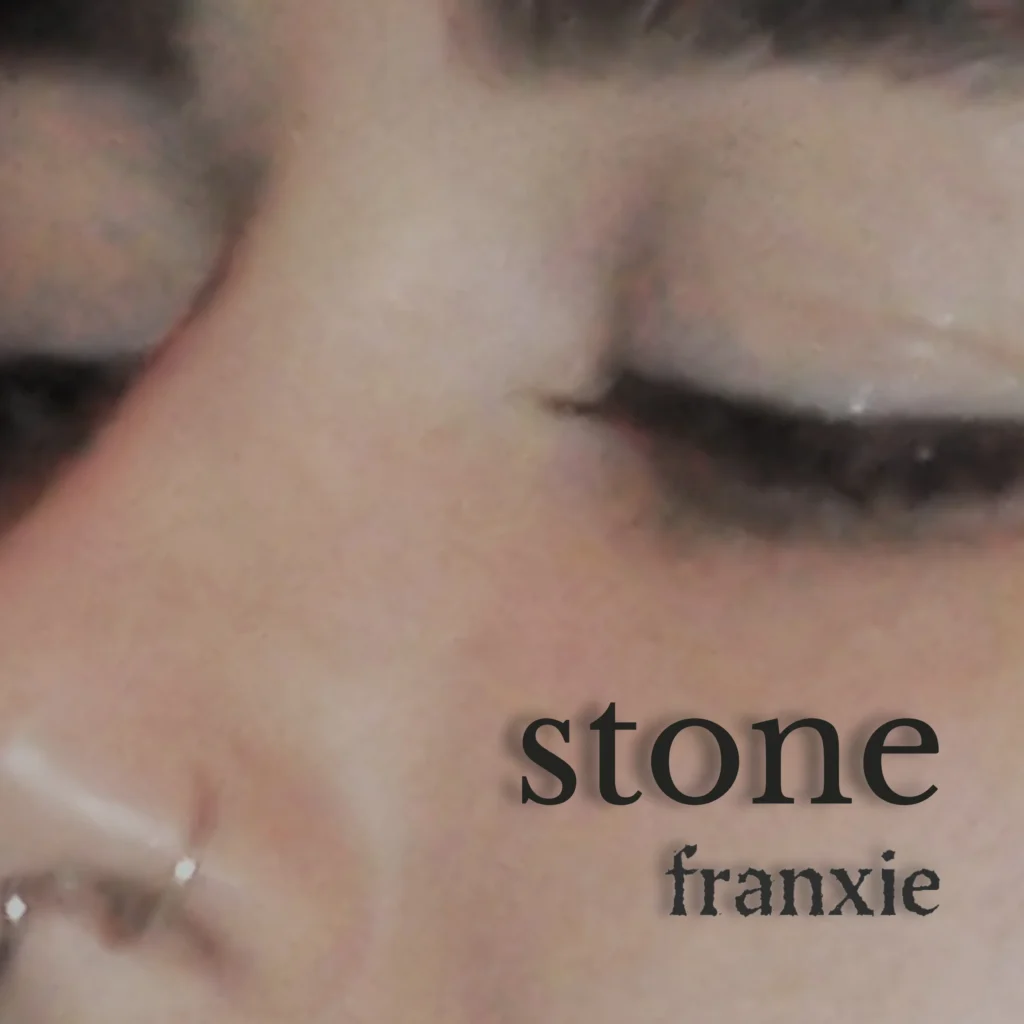

franxie’s “Stone” Turns Imperfection Into the Point

Franxie’s “Stone” could have gone in the way of a particular kind of singer-songwriter who treats emotional distress as an opportunity to place one sad piano chord beneath another until the listener understands that sadness has occurred.

Instead, it finds something more interesting in the familiar territory of anxiety, exhaustion, and the difficult business of letting go: it makes the recording itself part of the argument. There’s a resignation to the song that lends it less weight as a recounting of breakdown and more as a confession that persisting on one’s own simply isn’t heroic—let alone feasible.

Credit: Image by Taylah Chapman

That idea is reflected in the production. “Stone” began with franxie singing and playing grand piano into one microphone. The performance was not perfectly timed, and the combined vocal-and-piano recording offered little opportunity for surgical correction. She considered replacing it, presumably because musicians are legally required to distrust anything they made without spending three days fixing it. But the cleaner versions lost something essential, so the original stayed.

Additional backing vocals and parts from collaborator Sofia on bass and electric guitar were built around that take. The result is restrained alt-folk rather than a dramatic orchestral exercise in Being Very Sad. The piano remains exposed, while the added instrumentation gives the track a gentle sense of width and movement. Nothing arrives wearing a neon sign that says THIS IS THE EMOTIONAL CLIMAX.

There is a useful comparison to Spoon’s “Inside Out,” another song that turns repetition and understatement into emotional force. Where Spoon uses a hypnotic groove and spacious production to make detachment feel strangely liberating, franxie works from a more fragile acoustic center. “Inside Out” seems to float away from the problem; “Stone” sits with it until the weight becomes manageable. Both tracks understand that restraint can be more affecting than volume, but franxie’s approach is warmer, less sleek, and more visibly human.

Still, she doesn’t try to smooth out the edges with her voice. She sings directly into the mic, fragile but never overly dramatic, as if the track is being crafted in the moment rather than delivered as a finished expression. That suits the crux of the track: that the truth isn’t the same as perfect.

“Stone” does not solve anxiety, because a three-minute single is not a healthcare professional. What it does offer is a modest but convincing alternative to self-punishment. You can put the weight down. The song, wisely, does not insist that you pick it up again.

Follow franxie

Promoted Content

About the Author