Right off the bat, the album starts off with a kick, an ambitious prelude to a colorful world of pop and synth. The Other Realm understands that there is much more to pop music than that. There is glamour, and there is theatrics. Wannabe Popstar is a cultivation of all that.
The album has an 11-track sequence that is a storytelling in and of itself. It is arranged almost like a coming-of-age story narrated from the perspective of an aspiring artist who wanted more of life, away from the bleakness of reality.
Through the first track, When I Grow Up (Intro), the album immediately evokes an introspective nostalgia of childhood aspirations:
“Sir, what do you want to be when you grow up?”
“I wanna be a popstar!”
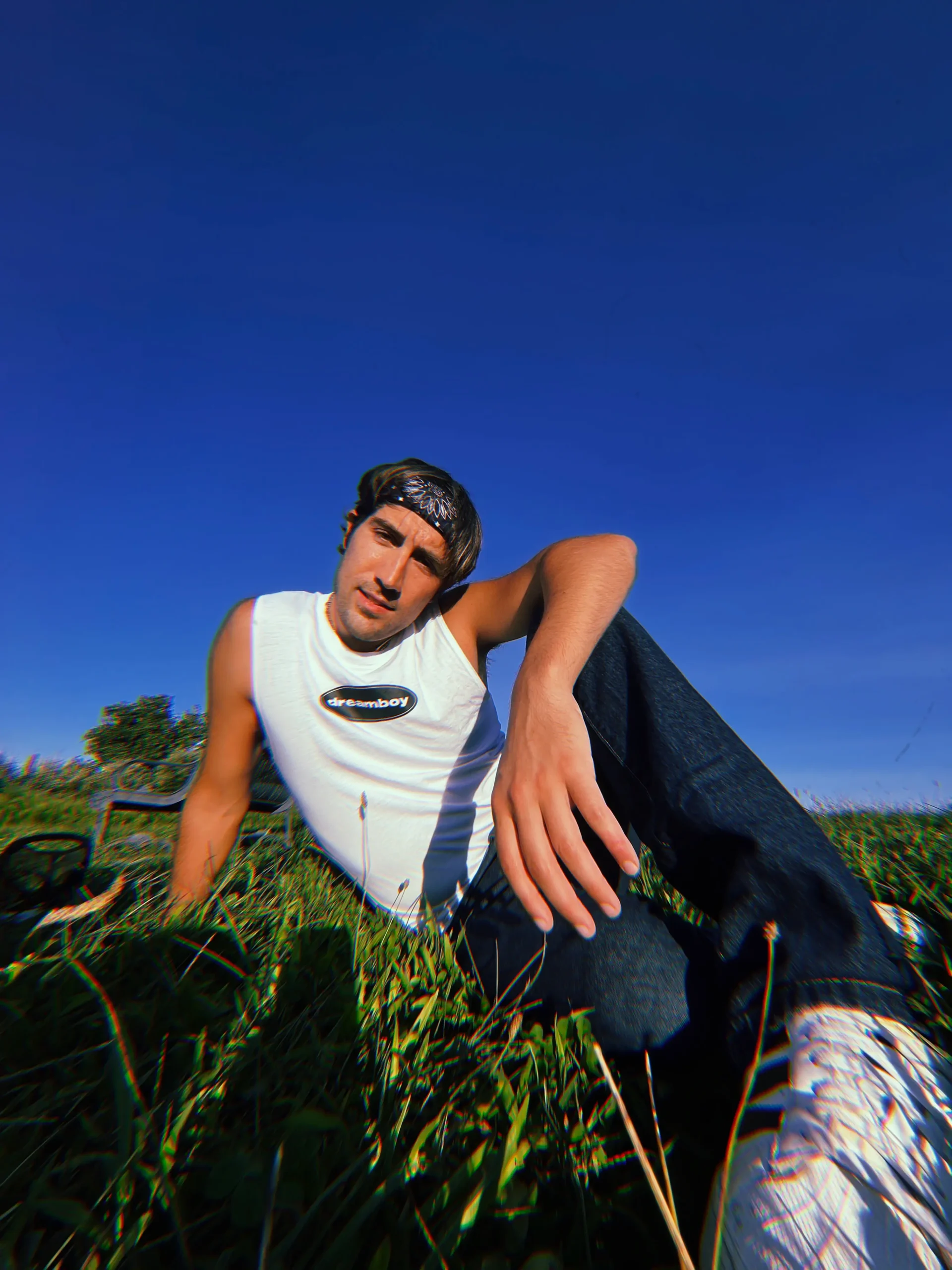
Credit: Photo by Thea Sousa
It works like an autobiographical because it is raw and honest, and in its own way, charming too. It definitely helped frame the rest of the album as an extension of what the artist had as a childhood ambition. From having aspirations and fantasies in the first track, the second track builds a more defining declaration. POPSTAR definitely embodies the larger-than-life attitude that the record is built around. Additionally, the seamless transition from the first track to the second one makes the connection more apparent and intentional.
Of course, having the limelight has its own unique consequences only apparent deeply understood by the one who is experiencing them firsthand. The sixth track, Underwear Party (What Am I Doing Here?), explores self-awareness and the uncomfortable realization of questioning if one’s presence is actually wanted, especially in an unfamiliar environment. You will wonder how you will be perceived and will constantly wonder why you put yourself in that situation.
It is both relatable and sad, exactly what The Other Realm advocates for—that not every party is a music video, and not every night out makes for a particularly flattering story. But that is the reality we have.
Aside from the self-awareness of The Other Realm, they are also unafraid to cover a well-loved song in 1974: the seventh track, You’re No Good. Originally released and popularized way before the release of Wannabe Popstar, it was a classic break-up song; but The Other Realm was able to put a twist on it to make it more about their own album’s premise.
With how unapologetic the artist is, one would easily be reminded of Lady Gaga’s earlier releases and Troye Sivan’s latest releases. Standing alongside the greats, The Other Realm has the ability to make Wannabe Popstar bigger than he could ever imagine. It has all the elements that all well-loved pop albums have as it treads in the territories of indie pop, synth-pop, and dance-pop influences. Although the album puts more emphasis in witty songwriting and introspective storytelling.
Normally, pop is often associated with memorable hooks and easily recognizable melodic structures and choruses. In short, pop songs are meant to linger. Meanwhile, since Wannabe Popstar also has elements of indie pop, it freely allows more room for unconventional perspective on personal narratives and idiosyncratic songwriting.
Hence, with these two working hand-in-hand, The Other Realm was able to create an interesting artistic space that would help their music thrive. In fact, the album’s greatest strength is that it understands how songs can be entertaining, memorable, and enjoyable without conforming to traditional techniques. The Other Realm is also able to find and embrace their creative identity in the very limitations that might otherwise distinguish an independent musician from a mainstream act.
Ultimately, Wannabe Popstar offers a unique perspective on the relationship between ambition and entertainment, as well as the desire to express oneself. There is also something liberating about how Wannabe Popstar communicates through its central premise.