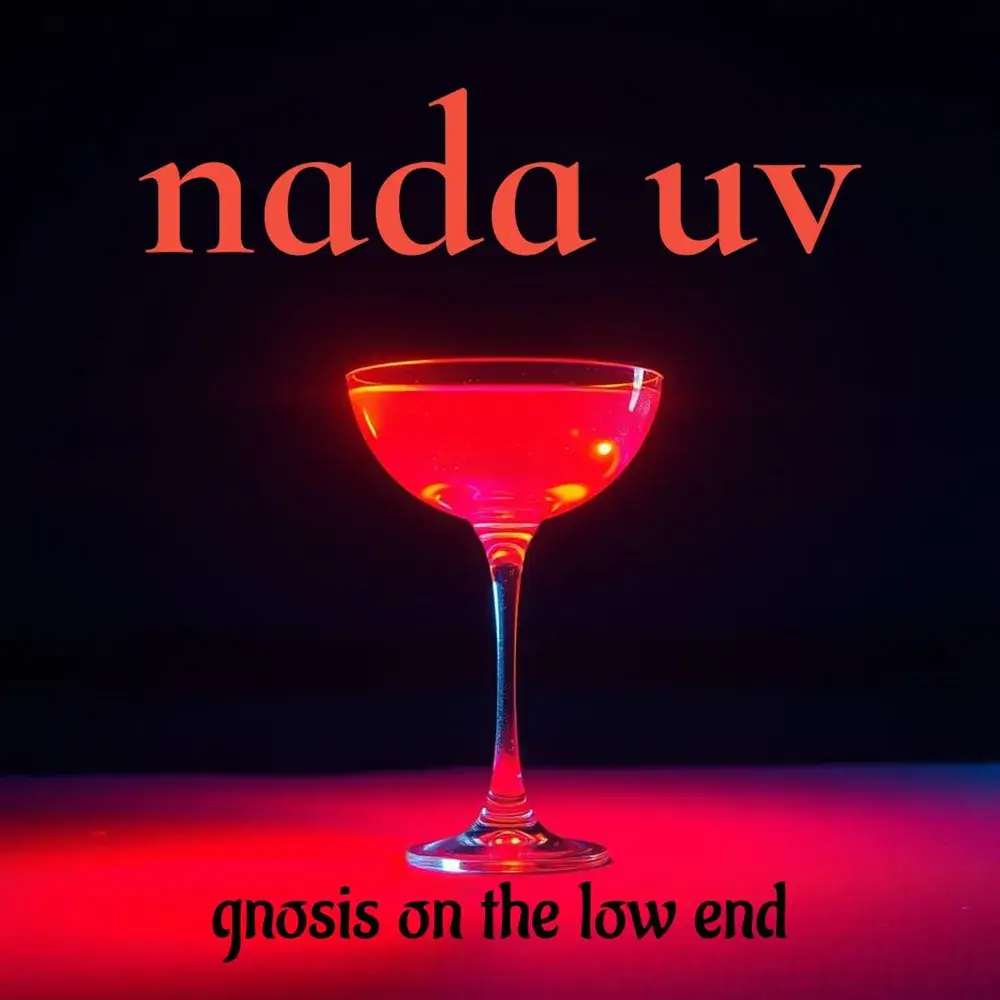
Some nights feel heavy, overwhelming and pointless, especially when you’re alone in front of a screen with headphones on and lost in your thoughts. Your mind starts running in circles and everything feels heavy and kind of pointless. That’s the type of night where you should be listening to this amazing and unusual album called “Gnosis on the Low End” by Nada UV. This album feels unpredictable in the best way. It’s like reaching into a box of chocolates: every track is a surprise, and each one leaves you happily wanting more.
I didn’t expect much at first. Then I was completely wrong. This dangerously addictive song ‘Die All the Time’ started playing. The vaportrap beat moves slowly underneath like a calm heartbeat while cool synths float around her soft, secretive singing. To me, the song feels like shedding old feelings, with small parts of yourself quietly fading so a new one can appear. The music stays simple but very careful. Deep bass sits in the background while soft drums keep the rhythm steady. Light vocals float over the track and slowly stick in your mind. At first the song sounds easy and calm, but after a few listens you notice how addictive it becomes. I swear this song gets stuck in your head.

‘Reading Scripts in the Dark’ makes me feel like tasting Pop Rocks for the first time. I’ll describe it as electric, surprising, and addictive. The song feels like it puts me in a neon-lit city after midnight, where every corner feels risky and free. It’s like a wild mix of candy, electro, and color, and I can’t quite find the words to describe it. It’s playful and a bit chaotic. You just sit there listening and think, “what exactly did I just hear?”
‘First Line Last Line’ opens like a quiet midnight confession. Hazy synths drift around the track while the mood stays low and mysterious. You lean in just to catch every detail. Then “Tongue on the Wire” jumps in with a sharp electric rush that hits with a dangerous, electric jolt. My favorite track on this album, ‘Where the Love Abides’, is, I think, one of the album’s best songs; it became one of my favorites because of its cyberpunk beat that feels like cruising through a neon-lit Night City in the dead of night.
Listening to “Call You Back” is like having your phone face down on the table with the screen quietly lighting up again. This track moves with a warm and slow R&B beat, with gentle drums, deep bass, and keyboards that feel like dim lights in a late-night room. It stays in that strange emotional space between wanting and hesitating. When I listen, I picture someone hovering over the “call” button but never quite pressing it. The warmth in the music is what keeps it feeling close, like a conversation that almost happens. It’s smooth, a little playful, and emotionally hanging in the air. That tension is what makes it so good.
“Sick of Saying Sorry” feels like it’s the relief you get when you finally turn off a buzzing fluorescent light. The song is built on a simple and deep beat that matches the steady, exhausting rhythm of a toxic situation. For me, the vocals show a controlled kind of frustration, like when you’re stopping yourself halfway through an apology you never needed to make. It sounds a little tired but firm so it sets a clear boundary that is polite, polished, and completely done with putting up with anyone’s nonsense.
“Here’s to the Amicable” feels like sharing a quiet toast with someone you once loved, both pretending nothing ever went wrong. The song starts with gentle beats and a deep bass, while light synths hang in the air like the smoke from a last conversation. To me, it captures the empty feeling of closure hidden behind polite smiles, using a simple low-end rhythm to reflect the tension of staying “amicable” when your heart has moved on. For me, it sounds like walking away from a house you used to call home, polished, quiet, and hauntingly final.
“It’s Fine Either Way” starts with a quiet, ironic calm. It feels like shrugging in the rain and pretending you are not soaked. That sense of distance fades in “This Is Who You Are,” where the music steps back and a strong realization sets in. When “I Love How You Love Me” plays, the tension lifts and everything feels lighter, like seeing sunlight after a long, sleepless night. For me, these songs show how emotions can shift from cold and distant to warm and accepting.
“Gnosis on the Low End” by Nada UV feels more like a soundtrack for a world that doesn’t exist yet. It’s the strong cyberpunk mood makes it easy to imagine it inside a dark futuristic RPG game. At the same time, it works just as well blasting through your headphones while you sit there taking in every sound.
What really stands out to me is how NADA UV removes the typical vaporwave sarcasm and leaves behind something genuine and intense but modern. The music lives in the low end, not only in the deep, smooth basslines, but also in the subtle sense of human connection. If you’ve ever driven through a city late at night, feeling like the main character in your own story, this is for you. Grab your best headphones and let this glitchy sound help you find some closure.
Follow Nada UV
Promoted Content
About the Author



Entertainment and news ghostwriter with years of experience. Writes clear, engaging content on celebrities, music, and pop culture for blogs and media platforms.