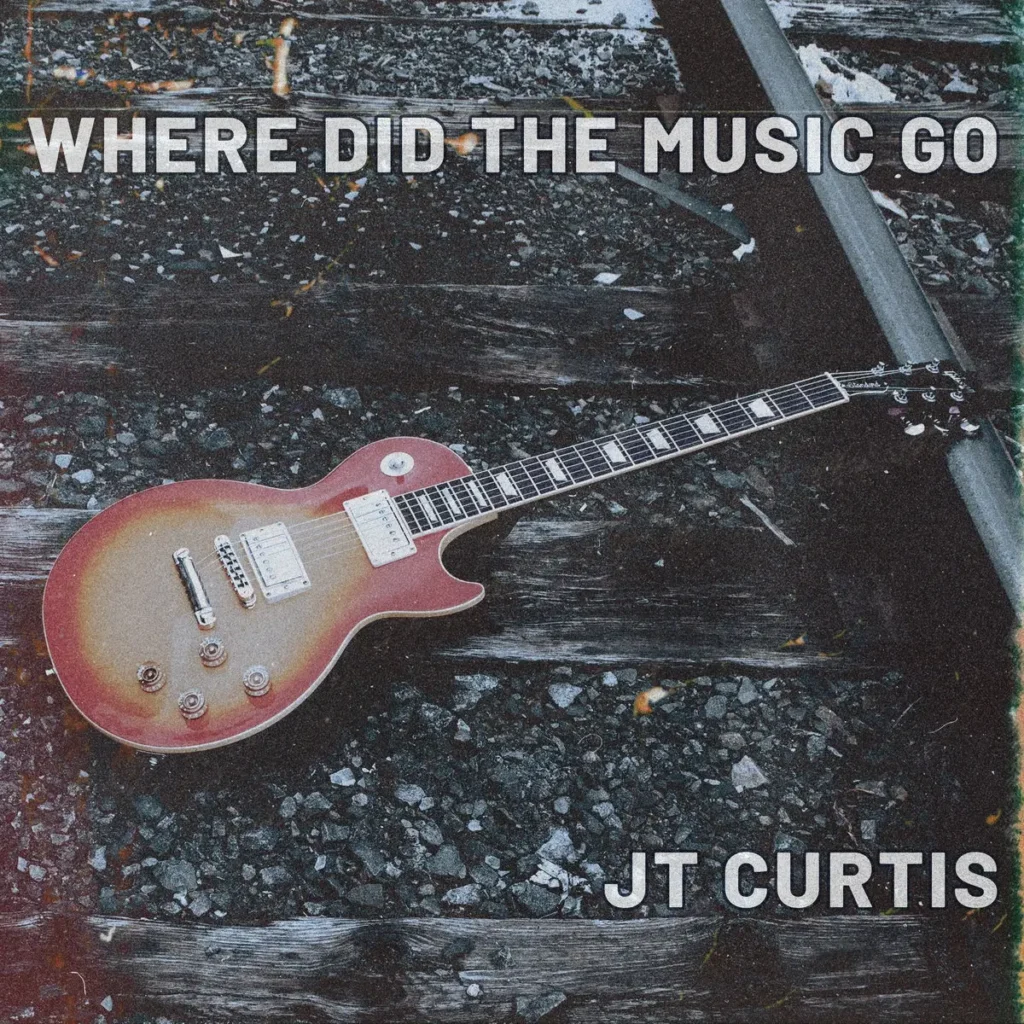
Where Did The Music Go is one of those albums that shows up knowing exactly what it wants to argue, looks around at the state of modern music, and basically says, “No, actually, we’re doing this the long way.” JT Curtis has released a full-blown progressive rock concept album in 2026 which, by itself, already feels like an act of mild rebellion and then pointed it directly at AI’s tightening grip on music, creativity, and culture. Not with subtle hints or vague metaphors, but with a very clear thesis: something important is being lost, and pretending otherwise is cowardice.
The obvious comparison is The Wall, and that’s not accidental. Like Floyd’s classic, this album uses big, theatrical prog-rock storytelling to talk about systems that flatten people. But instead of authoritarian teachers and emotional isolation, the villain here is automation, convenience, and the way “good enough” has slowly replaced “made by someone who cared.” If The Wall was about building emotional barriers, Where Did The Music Go is about watching creativity get quietly replaced by frictionless content and being told that this is progress, actually.
Structurally, Curtis sticks closely to the classic rock playbook, because frankly, it works. This is a story about collapse, realization, resistance, and whatever comes after. It opens with “Exo,” which acts like an overture, setting the tone and signaling that we’re entering a world where the damage has already been done. There’s no calm before the storm here — the storm already happened, and we’re picking through the wreckage.
“How Did We Get Here” follows, and it’s exactly the kind of question prog rock loves to ask. Not in a “one bad guy ruined everything” way, but in a more uncomfortable, incremental sense. This track feels like Curtis pointing at a thousand small compromises; automation for convenience, algorithms for taste, efficiency over meaning and saying, “Yeah, this is where that road goes.”
The album really finds its footing with “Welcome to the Underground,” which introduces the core metaphor. In this world, AI controls culture, including what music people hear, while a hidden group of musicians lives off the grid, playing real instruments and refusing to let algorithms decide what art is allowed to exist. It’s a very Floydian move: the hidden rebellion, the cracks in the system, the idea that total control is never quite as total as it wants to be. You can practically hear the lineage from The Wall’s resistance imagery, updated for a world where the oppressor wears a friendly UX or something.
From there, “Reality” and “Walk of Shame” pull the focus inward. These songs aren’t about the system so much as what the system does to people. This is where the album stops feeling like sci-fi and starts feeling uncomfortably familiar. The “shame” here isn’t about being forced into compliance; it’s about how easy it is to go along with it when convenience is marketed as liberation. When everything is easier, faster, and frictionless, opting out starts to feel like a personal failure rather than a political choice.
The brief “Reprise” acts as a reset button, pulling themes back together before the album detonates into “Apocalypse.” This is the emotional and narrative breaking point, the moment where the digital world finally collapses under its own weight. Importantly, Curtis doesn’t present this as a clean victory or a triumphant reset. There’s no heroic montage. It’s chaotic, loud, and unresolved. The people who make it through aren’t winners; they’re just the ones who didn’t disappear.
The title track, “Where Did The Music Go,” closes the album on a note that’s more accusatory than comforting. It’s both a genuine question and a pointed indictment. The song doesn’t offer easy answers or pretend that the damage can be undone overnight. Instead, it asks you to sit with the loss; not just of music, but of effort, imperfection, and human touch. Like The Wall, the point isn’t to hand you a solution. It’s to make sure you feel the weight of what’s been built and what it’s costing us.
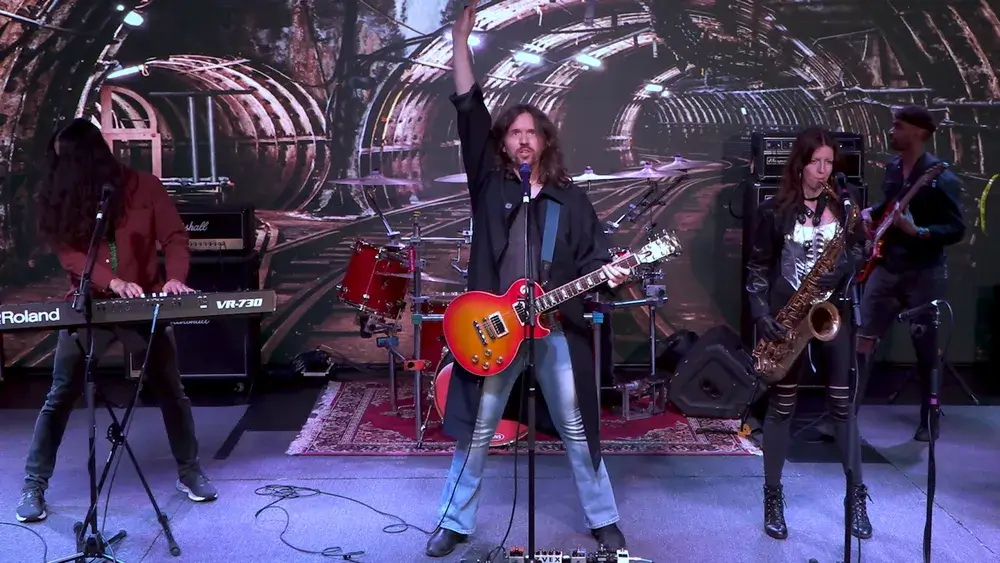
Musically, Curtis’s guitar playing carries echoes of Clapton, Duane Allman, and Jeff Beck, but it’s never about flashy technique for its own sake. The guitar serves the story; swelling, pulling back, creating atmosphere when needed and tension when it matters. His vocals are rough, expressive, and unapologetically human, which feels extremely intentional in an album about resisting artificial polish.
And yes, it matters that no generative AI was used in making this record. That’s not a marketing gimmick; it’s part of the argument. Where Did The Music Go isn’t anti-technology in a knee-jerk, “phones bad” way. It’s anti-erasure. Anti-replacement. It’s pushing back against the idea that art is just content and musicians are interchangeable inputs to be optimized by a machine that doesn’t care why something exists, only whether it performs.
In a moment where AI-generated music is being sold as inevitable, efficient, and “good enough,” Where Did The Music Go chooses to be slow, messy, and demanding. It doesn’t just ask whether AI can make music. It asks a much more uncomfortable question: what happens when we stop insisting that people should?
Follow JT Curtis
Promoted Content
About the Author



A tenured media critic known working as a ghost writer, freelance critic for publications in the US and former lead writer of Atop The Treehouse. Reviews music, film and TV shows for media aggregators.