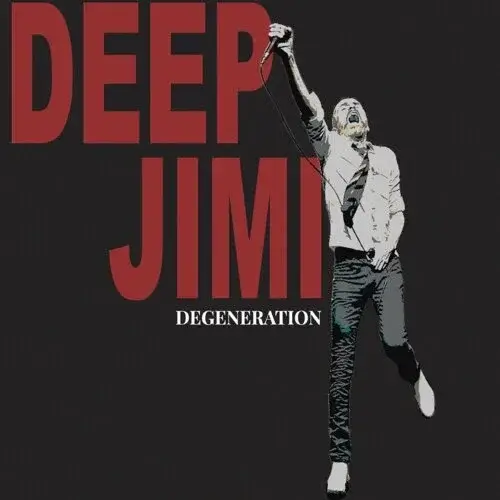
There is a very specific kind of rock album that seems to exist entirely to remind you that somewhere, somehow, a man in a leather jacket is still leaning dramatically into a microphone while someone behind him attacks a guitar like it personally insulted his family. Degeneration, the latest release from Deep Jimi, is one of those albums. Thankfully, it is also significantly more interesting than that description makes it sound.
While Degeneration absolutely operates within the familiar language of classic hard rock; big riffs, swaggering vocals, drums that sound like they’re trying to punch through the floor, it also understands something that many revivalist records don’t: nostalgia only works if you can make it feel alive.
Deep Jimi sound experienced. Comfortable. Unafraid to be loud, theatrical, or occasionally strange. The production is crisp, the performances are sharp, and every track contributes something meaningful to the album’s identity.
The album opens with “Jail,” and it wastes absolutely no time. The central guitar riff practically kicks the door off its hinges, demanding the universal rock-and-roll response: involuntary head movement and an immediate urge to throw devil horns into the air. There’s a distinct Billy Idol energy to it, that specific kind of rebellious theatricality that feels equal parts dangerous and deeply silly in the best possible way. It’s pure 80s rock muscle, but polished just enough that it doesn’t feel like cosplay.
Then comes “It’s Alright,” which takes a slight detour into bluesier territory. Not “sitting in a smoky jazz bar contemplating your failures” blues. More “driving too fast with the windows down while pretending your life has significantly higher stakes than it actually does” blues. The riff has that renegade swagger, and the song’s real trick lies in how it manipulates space. The verses strip things back, creating tension, before the choruses arrive and everything floods back in. It’s dynamic in a way that feels deliberate rather than obligatory, which is surprisingly rare.
“Nothing Matters,” despite sounding like the title of a song written after a particularly disappointing tax return, is one of the album’s strongest moments. The guitars immediately evoke AC/DC, but there’s something funkier and more controlled happening underneath. Deep Jimi aren’t simply copying a classic formula; they’re loosening it, bending it slightly, adding enough texture to keep things from becoming predictable. It still rocks. It just rocks intelligently.
“My Degeneration” shifts the atmosphere entirely. The drumming pulses with mechanical intensity, while the vocals take on an almost hypnotic quality, floating above a bassline that feels strangely ominous. About thirty seconds in, the whole thing escalates, as if the song has suddenly remembered it’s supposed to be dramatic. The chorus introduces ghostly backing vocals that make everything feel vaguely dreamlike, which is an unexpected but genuinely effective choice. It’s one of the few moments on the album where Deep Jimi stop sounding like a very good rock band and start sounding like a band with a genuinely distinct identity.
“Hocus Pocus Man” continues that theatrical streak, opening with a riff that sounds like it wandered in from a ghost-town western populated entirely by haunted outlaws. It’s cinematic in a wonderfully odd way; part Alice Cooper, part Coen Brothers soundtrack, part fever dream. The band leans into the absurdity rather than running from it, which is exactly the right instinct.
Then there’s “Gimme Gimme,” the album’s designated earworm. You know the type. The kind of chorus that implants itself in your brain and refuses to leave, cheerfully looping in the background while you try to complete unrelated tasks. It’s catchy in a way that feels almost suspicious, as if someone engineered it in a laboratory specifically to test your resistance to repetition.
By the time “Waiting for the World to Shine” arrives, Degeneration has earned the right to go bigger. It opens with a rapid, almost dystopian bassline and layers atmospheric textures over it, building slowly into something much more expansive. It’s not merely a finale; it feels like an argument for the album’s entire existence. A reminder that Deep Jimi can do more than deliver riffs; they can build atmosphere, sustain tension, and close on something that actually lingers.
Because Degeneration could easily have settled for being a competent exercise in retro rock appreciation. Instead, it feels like a band genuinely engaging with the traditions they clearly love, borrowing their power without becoming trapped inside imitation.
Rock music has spent years being declared dead, usually by people who have apparently never attended a festival or spoken to anyone with a denim jacket. Degeneration doesn’t try to revive it; Degeneration simply reminds you that rock music never left.
Follow Deep Jimi
Promoted Content
About the Author

A tenured media critic known working as a ghost writer, freelance critic for publications in the US and former lead writer of Atop The Treehouse. Reviews music, film and TV shows for media aggregators.