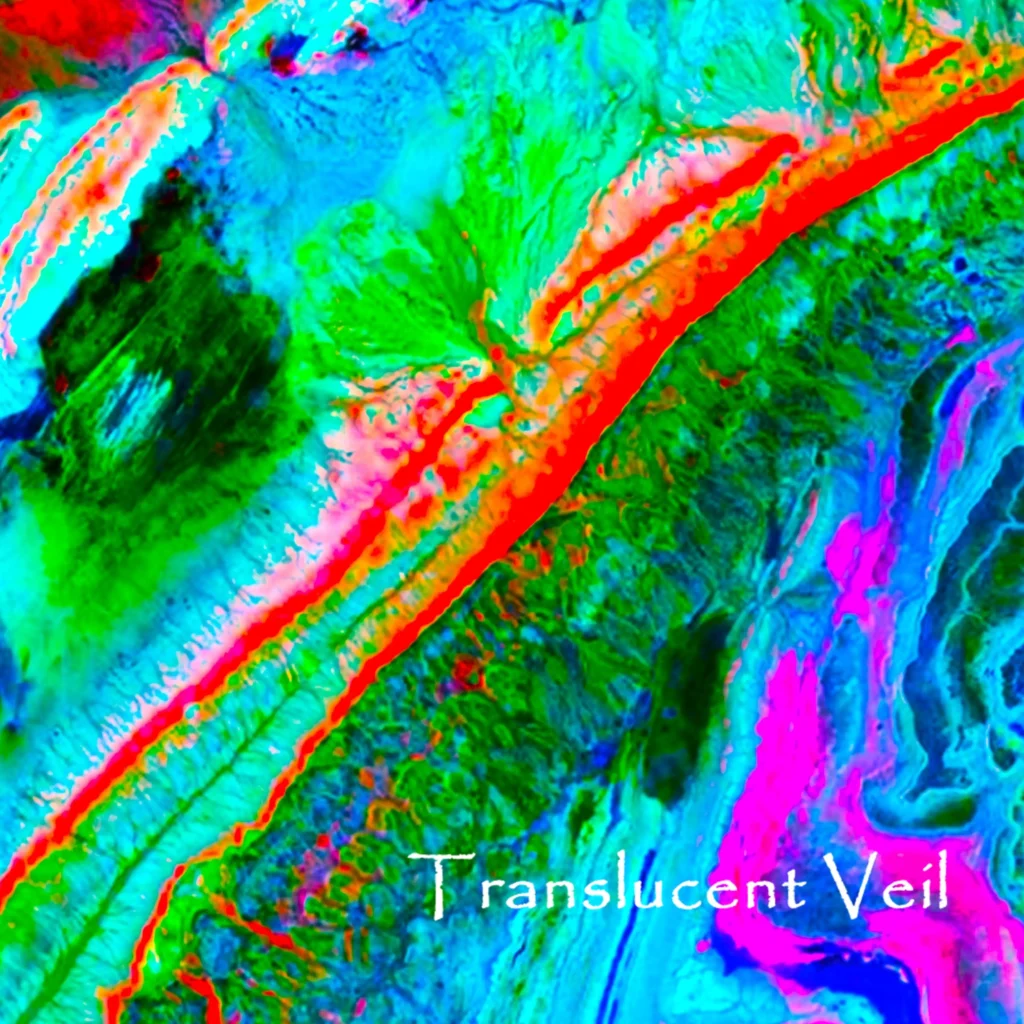
Translucent Veil is a self-titled album featuring six tracks that explore late-’60s and early-’70s psychedelic rock and hard-rock influences. Likewise, bands like Hotel Books, Two Door Cinema Club, and The Maine occupy a similar branch of the musical landscape to the one Translucent Veil sits in. Even so, the band seemed particularly interested in forming a creative philosophy of their own.
For one, the track lengths do not seem to follow conventional principles of song production. It does not shy away from placing a two-minute song almost directly alongside a twenty-minute one.
The album opens with The Veil. There is something almost cinematic in that song that hooks you from start to finish. Maybe it is the way the song gradually develops from a tense, distorted guitar arrangement into its full rhythm section, providing an ample introduction—like a curtain being pulled back as the stage is finally set. It feels like an invitation into the world the album is about to create.
Then, the story begins to unfold further with Last Night’s Dream, where introspection seems to be the main foothold. The song leans toward a more experimental and psychedelic rock arrangement, slipping slightly away from having the guitar occupy the center stage. Instead, it feels more like a gentle accompaniment to a dream you are slowly waking up from. There is something fleeting about it, like trying desperately to remember the details of a dream before they disappear completely.
And maybe it was the dream that led to a realization—or maybe not. The former seems to be the case for the album. In Time We’re Moving On, its meditations on change and sound become more apparent and tangible. Driven by electric guitars and drums, the song moves into nostalgia with the vocals following along like a perfect puzzle piece.
Continuing on the same trend, Under the Sea reveals that the band is not afraid of complexity, even when that complexity comes in the form of restraint. The two-minute song packs a punch from the very beginning with its straightforward guitar accompaniment. There is a garage-rock immediacy to it that makes the track unrestrained. After the more introspective musical passages preceding it, the fourth track almost feels like being jolted awake, as if the band is making a point.
And Dreams and Sin lets you sit with it for a few moments, then you are confronted with vocals reminiscent of John O’Callaghan of The Maine. But beyond that familiar quality, the track eventually settles into a character of its own. This is where Translucent Veil becomes more than an exercise in vintage-rock aesthetics. The fifth track carries a duality in its sound—there is a looseness to its rock instrumentation, yet a certain tension remains throughout.
Then comes Translucent Veil’s current magnum opus and the album’s absurdly ambitious closing track: Seasons Must Change. Throughout the album, the songs revolved around dreams, time, and change, and Seasons Must Change feels like the point where all of those ideas finally converge. Aside from its almost absurd length, the song also feels kind of romantic in the way it lets you breathe, wander and return, expanding and disappearing into its ever-changing instrumental passages. It feels like an indulgence only the guilty take pleasure in, yet it makes a statement of intent: to exist on your own terms. And perhaps that is why Seasons Must Change feels like such a befitting ending to an unveiling.
The curtain has been pulled back and the stage has been set.